Service
Blood Cleanup
Blood looks like a cleaning problem. It is actually a safety problem. Even a modest spill can carry bloodborne infections, and the risk does not end when the blood dries or when the stain fades. Blood cleanup is the service that treats it properly: full removal, real disinfection, and legal disposal.
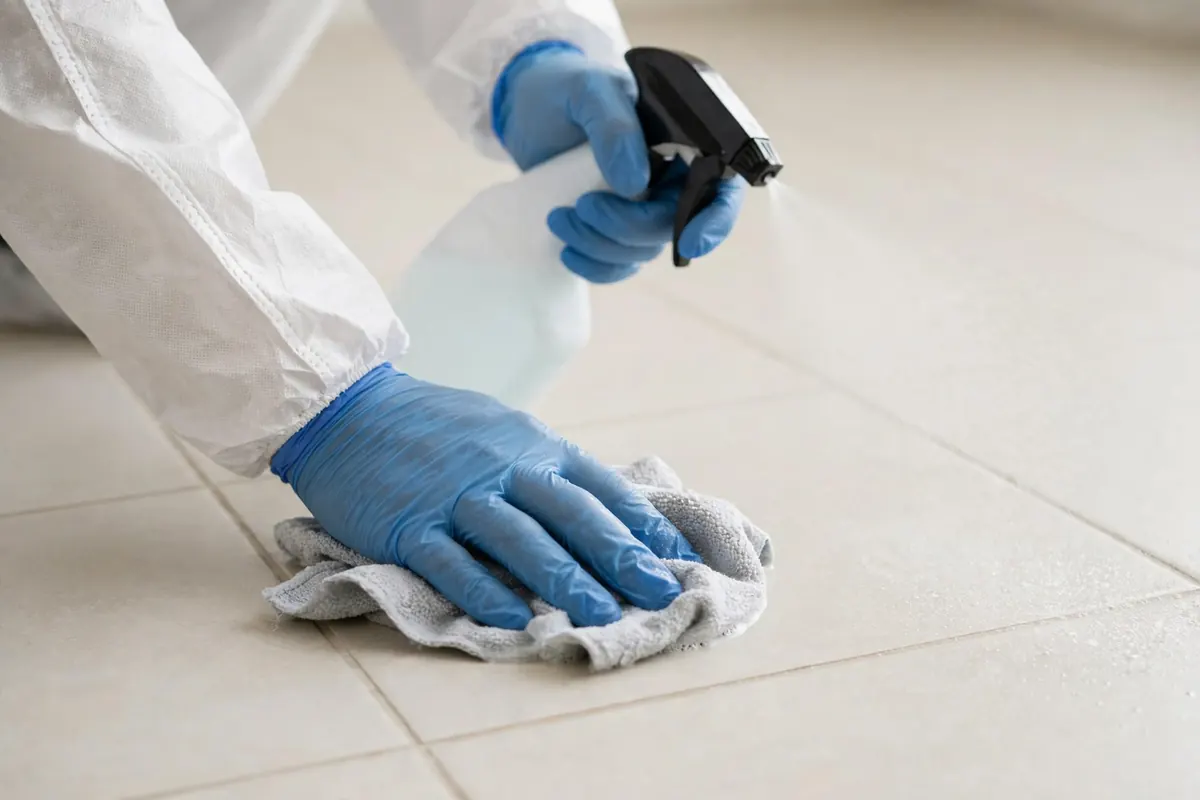
Blood cleanup is the safe removal and disinfection of blood from homes, vehicles and workplaces. Because blood can carry hepatitis and other infections, even after it dries, trained crews treat it as regulated biohazard: they remove what it soaked into, disinfect every surface it touched, and dispose of waste through licensed transport.
Why household cleaning is not enough
Bleach and hot water feel thorough, but three problems remain after a home cleanup. First, disinfection only counts if the product, dilution and contact time are right; professional crews use hospital grade disinfectants rated for bloodborne pathogens and verify the result with surface testing. Second, blood travels: it wicks through carpet into padding, through grout into the bed beneath tiles, through mattress ticking into foam. Wiping the surface leaves the reservoir underneath. Third, whatever you wipe it up with becomes contaminated waste, and it cannot legally go in household trash in most places. Crews solve all three problems by training and by process, which is the standard the OSHA bloodborne pathogens rule sets for anyone whose job involves this work.
Common calls
- After an injury at home: falls, cuts and medical episodes, often involving an older relative. See also trauma cleanup.
- After a death: where blood is one part of a larger scene, handled under death cleanup or suicide cleanup.
- In rental properties: landlords between tenancies, sometimes weeks after the event, when the spill is long dried.
- In vehicles: after collisions and medical emergencies, where fabric seats and carpet hold fluids deep.
- At work: first aid incidents and injuries in workplaces whose staff are not trained or equipped for blood.
How the crew works
The crew maps the full spread of the spill first, including under and inside materials, because the plan depends on it. Porous material that blood has soaked is removed and sealed as regulated medical waste. Hard surfaces are cleaned, then disinfected, then tested. Grout lines, seams and joints get individual attention, since that is where residue hides. Odor, when present, is treated at the source. Before leaving, the crew confirms the area is safe to use and gives you the waste paperwork for your records or your insurer.
Costs
A small, contained spill on hard flooring is among the least expensive jobs in this trade; blood through carpet, padding and subfloor costs more because material must be removed and replaced. The biohazard cleanup cost page publishes typical ranges, and every job follows the same quoting rule: the final price is confirmed by the contractor after seeing the job, in a written quote before work starts. Insurance frequently covers blood cleanup that follows an accident or a death; the insurance coverage page explains the usual claim path.
Questions families ask us
Is dried blood still dangerous?
Yes. The viruses that matter most, including hepatitis B, can stay infectious in dried blood for days. Dried does not mean safe, which is why blood cleanup follows the same process whether the spill is fresh or old.
What size of blood spill needs a professional?
A useful rule: if it soaked into anything porous (carpet, mattress, upholstery, grout), if it is more than you could cover with a dinner plate, or if the blood is not your own, treat it as a professional job.
Can blood stains be removed, or does material have to go?
Hard, non-porous surfaces can be fully disinfected and kept. Porous material that blood has soaked into usually cannot be disinfected to standard and is removed. The crew tests and tells you honestly which is which before anything is taken out.
Do you clean blood in vehicles?
Yes. Vehicle interiors are a common job of this kind after accidents and medical emergencies. Affected trim and upholstery are treated the same way as in a home.
One call starts the process
You do not have to face the scene, the smell or the paperwork alone. Call and we will connect you with a trained, verified local cleanup crew, day or night.
Call NowOpen 24 hours, every day, nationwide.