Guide
Hoarding Cleanup: Where to Start
Every family facing a hoarded home asks the same question, and it is the title of this guide. The answer is a sequence: the conversation, the safety pass, the sorting system, then the deep clean. Rush the order and the work fails, usually with the relationship damaged on the way.
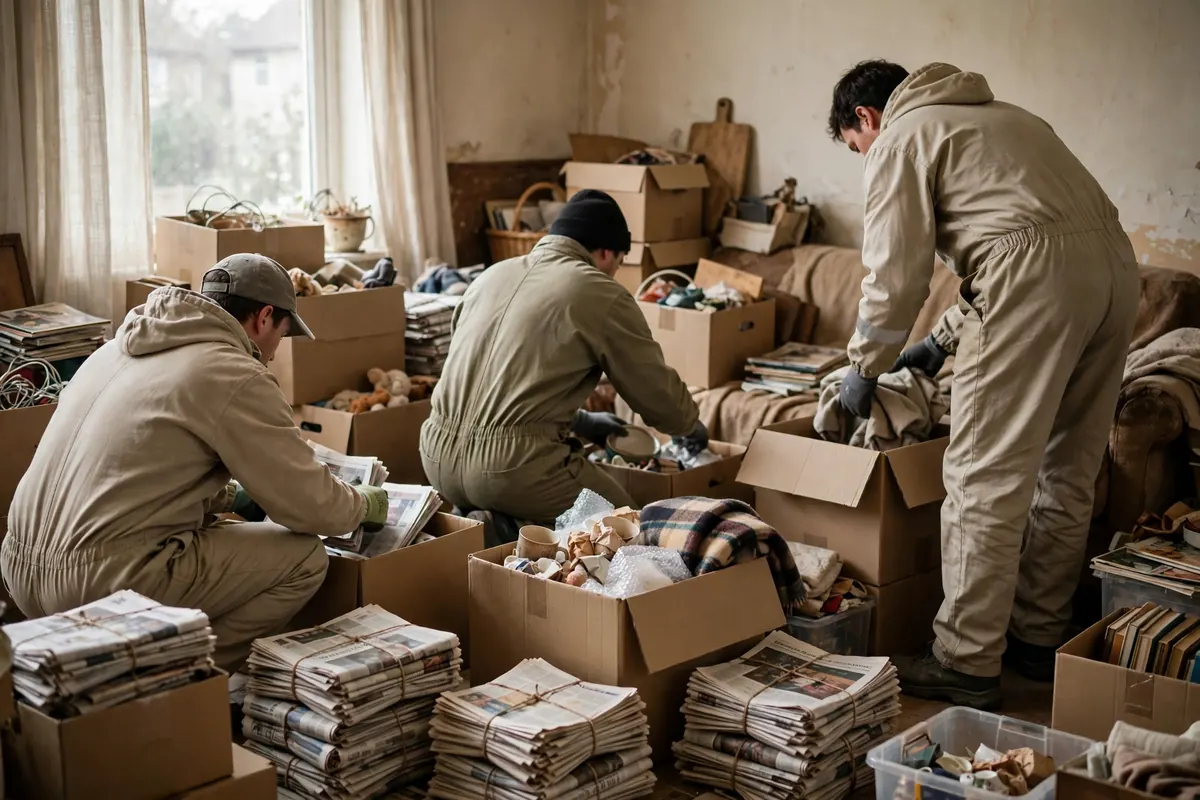
Start with safety, not tidiness: clear exits, restore the kitchen, bathroom and heating, and remove genuine hazards first. Agree the plan with the person who lives there wherever possible, sort in categories that protect documents and valuables, and stage the work over days rather than forcing a single purge.
Step 1: The conversation
If the resident is alive and involved, nothing works without their agreement, because a forced purge is both cruel and temporary. Frame the goal as safety and function, not standards: firefighters need a path in, the toilet must work, the stove must be reachable. Many families find a deadline helps (a landlord inspection, a discharge from hospital, a grandchild visiting) because it gives the change a reason that is not personal criticism. If the property is empty, through death or a move to care, skip to step 3 and treat belongings with the same respect; the family is watching how you handle a life's accumulation.
Step 2: The safety pass
First work is hazard removal, in this order: exits and hallways cleared to a walkable path; perishable waste, animal waste and anything attracting pests out; sharps, chemicals and spoiled food neutralised; utilities checked (water, heat, electricity) once appliances are reachable. This pass is also where biohazards concentrate, which is why this work belongs to the hoarding cleanup service rather than a skip and a shovel: animal waste, mould and occasionally human waste carry real infection risk, handled in protective equipment.
Step 3: The sorting system
Room by room, everything lands in one of five categories: keep here, keep in storage, donate, recycle, dispose. Two protections matter. A finds tray for the valuables that reliably surface in hoarded homes: cash, jewellery, documents, photographs, keys, medication. And a rule agreed in advance about who decides borderline items, so the work does not stall on every box. Pace is part of the system: staged days with visible progress hold motivation better than a single marathon.
Step 4: The deep clean and repairs
Once volume is out, the property shows its real condition: floors, walls and plumbing that have been unreachable for years. Deep cleaning and disinfection follow, then the repair list (flooring, drywall, fixtures) that a regular contractor can finally quote on. The timeline guide gives realistic durations; most homes take two to five days of crew work overall.
When a landlord or the city is involved
Code enforcement and tenancy deadlines add pressure but also structure: work to the cited violations first. Landlords will find the operational detail in the landlord guide. Whatever triggered the cleanup, keep the documentation: before and after photographs and the crew's invoice are what inspectors and insurers ask for.
Questions families ask us
Where do I start if the person is still living in the home?
With the person, not the property. A cleanup that discards someone's belongings against their will rarely holds; the home refills. The durable pattern is agreement on goals first (safety, access, working kitchen and bathroom), then staged work with the resident involved in decisions.
What should never be thrown away without checking?
Documents, cash and valuables (all routinely found inside piles), medication, keys, photographs, and anything the resident flags. A good crew sorts into agreed categories with a finds tray for valuables, rather than bagging everything as waste.
How do I raise this with a parent or relative?
Lead with safety and specifics, not judgment: the stove cannot be reached, the hallway would block an ambulance stretcher, the bathroom plumbing is failing. Offer the plan (crew, pace, their control over decisions) rather than a verdict on how they live.
One call starts the process
You do not have to face the scene, the smell or the paperwork alone. Call and we will connect you with a trained, verified local cleanup crew, day or night.
Call NowOpen 24 hours, every day, nationwide.