Guide
After Police Release a Crime Scene
The release of a scene is a strange moment: the investigation leaves, the tape comes down, and the property is suddenly, entirely, yours again, in the condition the worst day left it. This guide covers what happens from that moment, in the order it should happen.
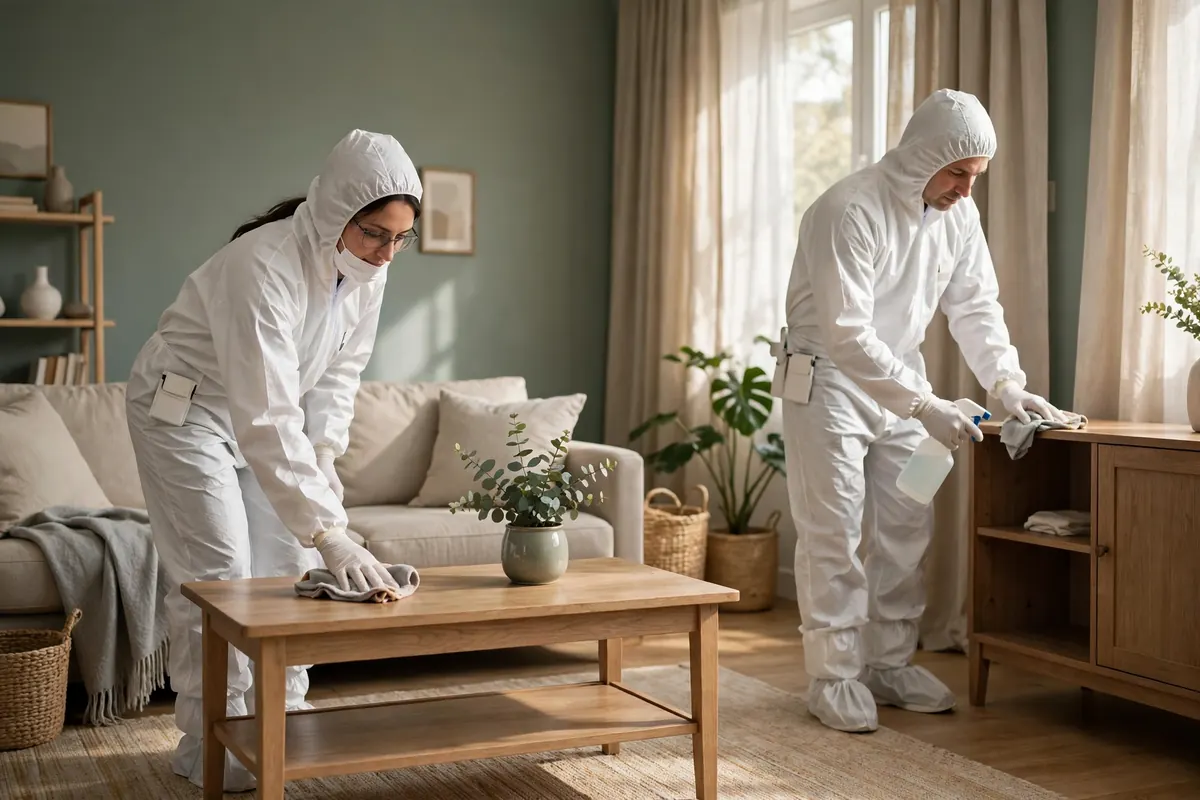
Once police release a crime scene, the property returns to its owner, along with responsibility for it. The practical order is: open the insurance claim, book the cleanup crew, let the crew remove the biohazard and investigation residue, and apply to victim compensation for costs insurance misses. Nothing can be cleaned before release.
What the property will look like
Prepare for two layers. The first is the event itself: blood and fluids where the crime happened, which may have spread further than you expect. The second is the investigation's footprint: fingerprint powder, a fine dark or light dust, on door handles, light switches and every surface examiners touched; evidence markers and tape; furniture and cupboards disturbed by searches; sometimes tear gas residue if it was used during an arrest. None of this is damage anyone chose; it is how investigations work. Cleanup crews handle both layers as one job under crime scene cleanup.
Your first calls, in order
- Your insurer. Open the claim while the details are fresh; our claim guide has the full sequence.
- The cleanup crew. If you contacted a service during the investigation, the crew is already matched and can schedule immediately. If not, one call now does it.
- The victim advocate. If you have not yet heard about victim compensation, ask; the application clock may already be running.
What the crew does, and what you should not
The crew assesses, quotes in writing, removes biohazard and affected material, cleans investigation residue from surfaces, disinfects, treats odor and tests. What you should not do is begin cleaning yourself before the crew and the insurer have what they need: apart from the infection risk, altering the scene complicates the claim. Securing the property (locking up, boarding a broken door) is fine and sensible; cleaning is not.
Belongings and evidence
Items taken as evidence are returned through the agency's process, on its timeline; crews cannot help with that. Belongings at the scene are handled with care: the crew sets aside personal items and checks with the family before anything personal is removed. If a crew finds anything that appears to be evidence the investigation missed, their standing instruction is to stop and contact the agency, not to clean around it.
The weeks after
Practically, the property is usually restored within days of release; the timeline guide gives the ranges. The paperwork tail (insurance settlement, compensation application) runs longer. Keep the crew's file together: scope, invoice, manifests, and the release confirmation if you received one in writing. It is the complete record of the property being handed back and restored.
Questions families ask us
How long do police usually hold a scene?
It varies with the investigation: hours for a straightforward case, days where forensic work is extensive. The investigating agency tells the family or owner when the scene is released. Cleanup cannot start before that moment, under any circumstances.
What will I find when I get the property back?
The scene as the investigation left it: the biohazard itself, fingerprint powder on surfaces throughout, sometimes markers and tape, and disturbed belongings from searches. Expect it to look worse than the event alone would explain; that is the investigation's footprint, and crews are used to it.
Who do I call first after release?
Practically: your insurer, to open the claim, and a cleanup crew, to book the work. If the crew was matched during the investigation period, they can start promptly. Victim advocates can also help you reach the state compensation program at the same stage.
One call starts the process
You do not have to face the scene, the smell or the paperwork alone. Call and we will connect you with a trained, verified local cleanup crew, day or night.
Call NowOpen 24 hours, every day, nationwide.